Boho Shelf Styling: Arranging Bedroom Shelves With Natural Pieces
A repeatable method for bedroom shelves: clear them, then rebuild each one from an anchor, a tall natural element and a small low object, with varied heights, repeated colors and empty space.
At a glance
- Difficulty
- Easy
- Time
- About 45 minutes to an hour
- Best for
- Open wall shelves or a bookcase that looks cluttered or bare
- Renter note
- No fixings needed if the shelves are already up or freestanding
What you need
- A soft cloth for dusting
- Books in two or three colors
- One or two clay vases
- A lidded basket or wooden box
- A small bowl or dish
- A trailing plant or a few dried stems
Open shelves in a bedroom tend to go one of two ways: a long line of small things that reads as clutter, or two lonely objects on a bare plank. Good boho shelf styling sits between the two, and it depends less on owning the right objects than on the order you put them back in.
The method below works on a pair of wall shelves, a bookcase or the top of a low unit. Empty everything, then rebuild each shelf from three kinds of pieces: an anchor, something tall and natural, and something small and low.
Three roles every shelf needs
Boho shelves look collected rather than matched, so the pieces can come from anywhere. What stops them from looking random is that each one has a job.
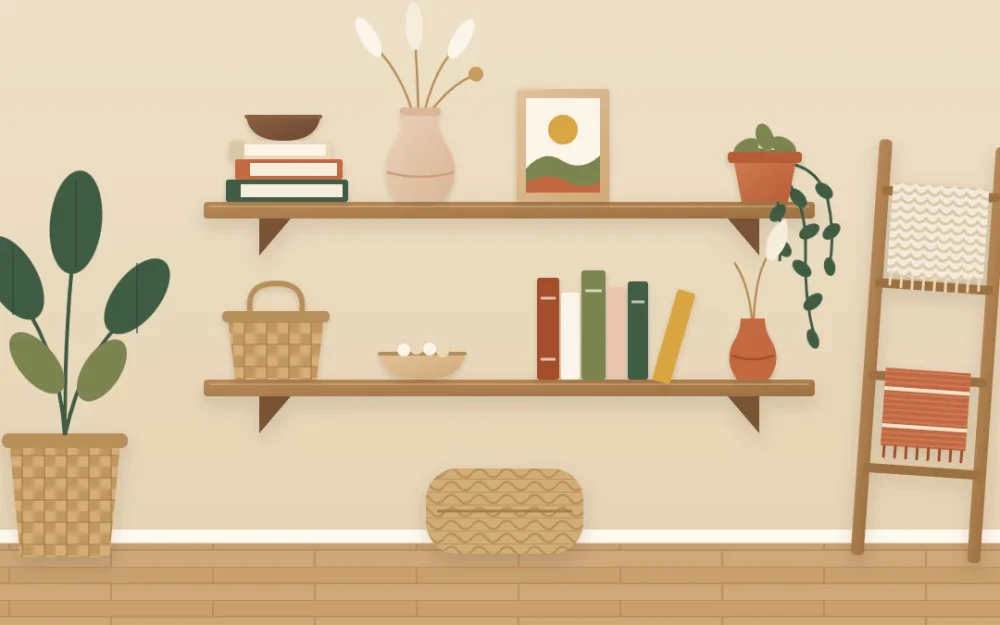
- An anchor. The heaviest-looking thing on the shelf: a short stack of books lying flat, a row of upright books or a lidded basket. It gives the eye a place to land.
- A tall natural element. A clay vase with a few stems, a leafy plant in a terracotta pot or a slim wooden vessel. It supplies height and a living or once-living shape.
- A small low object. A wooden bowl, a strand of wooden beads, a shallow ceramic dish or a smooth stone. It finishes the group without adding bulk.
Mix the materials as you go: matte pottery, wood, something woven and the paper of book spines. If most of your furniture is timber, the guide to mixing wood tones and finishes helps you choose bowls and frames that sit well beside it.
The method, step by step
- Clear every shelf completely and wipe it down. Styling around what is already there rarely works as well as starting empty.
- Sort what came off into four piles on the bed: books, pottery and vases, woven and wooden pieces, and everything else. Most of the last pile belongs in a drawer.
- Pick two or three colors from the room, for example cream, terracotta and warm brown, and pull out the pieces that fit them.
- Place one anchor on each shelf first, alternating sides: left on the top shelf, right on the next one down.
- Add one tall natural element to each shelf, at the opposite end from the anchor or standing on top of it.
- Finish each shelf with one small low object, set on flat books or just in front of the tall piece.
- Walk to the doorway, look back, and remove one thing from any shelf that still feels busy.
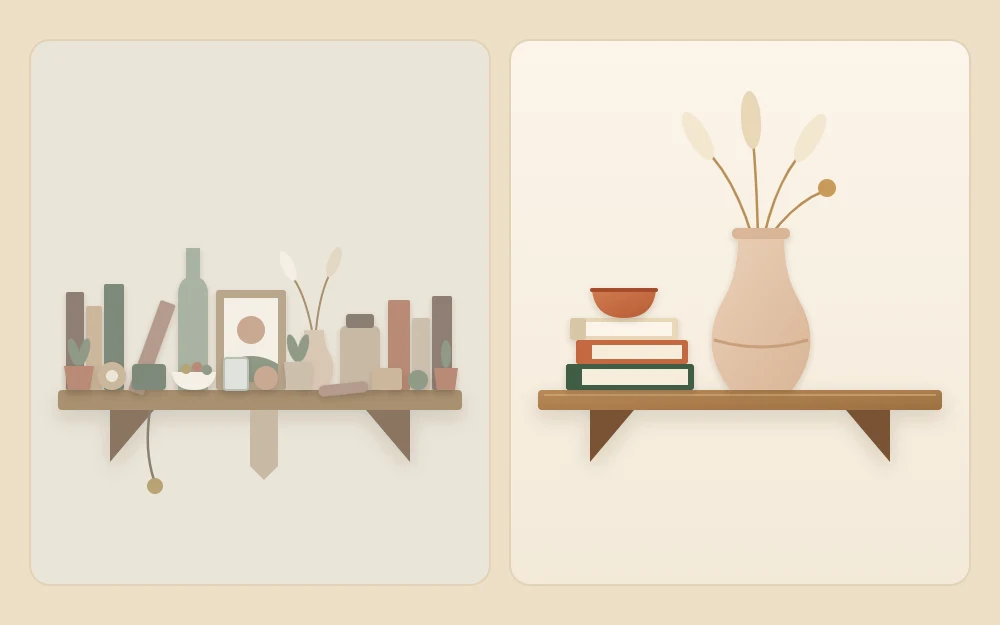
Vary heights in a zigzag
A shelf where everything is the same height looks like a shop display. Aim for a tall, a medium and a low piece in each group, so the top edge of the arrangement rises and falls.
Then read the shelves together. If the tall vase sits at the left of one shelf, put the tall piece at the right of the shelf below. Your eye travels down the unit in a loose zigzag instead of dropping straight down one side, and the visual weight stays even from left to right.
Flat books are the easiest way to adjust height: two or three under a small bowl lift it enough to matter.
Leave about a third of each shelf empty
Empty space is what makes the rest look chosen. As a rule of thumb, keep roughly a third of each shelf bare, in one or two clear stretches rather than thin slivers between objects.
A workable pattern is one group of three pieces and one single piece per shelf, with a gap of about a hand-width, roughly 4 in (10 cm), between them. On a short shelf, one group is enough.
Tip
If a shelf has to hold everyday things, give them a container. A lidded basket or a wooden box counts as the anchor and keeps chargers, lotions and loose papers out of sight.
Repeat two or three colors
Color is what ties separate shelves into one picture. Each of your chosen colors should appear at least twice, on different levels: a terracotta vase up high and a terracotta pot lower down, cream book spines on two shelves.
Books with loud covers can be stacked flat with the plainest one on top, or turned so the page edges face out. The natural tones of wood, jute and rattan behave as neutrals and do not count toward your limit. One small framed print in the same colors, leaning against the back of a shelf, is enough art for the whole unit.
Put plants and stems at the edges
A trailing plant looks best at the end of an upper shelf, where its stems can fall past the edge without hiding what stands below. Leave the space underneath clear, use a saucer or an outer pot without a drainage hole so water stays off wood and books, and pick a spot that suits the light the plant really gets.
Where the light is poor, dried material does the same job. A few feathery grasses or seed heads in a clay vase add height and movement; the guide to dried flowers and grasses covers stems and vase proportions. Keep dried stems away from heaters, lamp bulbs and any flame.
Quick fixes when it still looks off
- It looks cluttered. Take off every object smaller than your fist, then put back only one or two.
- It looks sparse. Swap small pieces for fewer, larger ones instead of adding more.
- It looks flat. Set something woven or rough beside something smooth, and check that the heights differ.
- It looks stiff. Turn one piece at an angle, lean a frame, or let a strand of beads spill over a book.
Keep the shelves safe and usable
Styled shelves still have to work. The things you reach for at night belong beside the bed instead, and the bedside styling formula shows how to arrange those.
Good to know
Load a shelf only within what its maker states, and keep the heaviest pieces, such as book stacks and large pots, on the lowest levels. A wall shelf needs hardware chosen for your wall type and for the weight of the shelf plus everything on it, fitted to the manufacturer instructions. If you are unsure, get help or use a freestanding unit, and follow the maker’s guidance on securing tall furniture. Avoid a loaded shelf directly above the pillows.
Frequently asked questions
How many things should go on one shelf?
A common starting point is three to five pieces per shelf: one anchor such as a stack of books or a basket, one tall natural element and one small low object, sometimes with a single piece standing apart. If roughly a third of the shelf is still bare, you have probably stopped at the right moment.
Do the objects on boho shelves have to match?
No. The look comes from pieces that seem collected over time, so different shapes and makers are welcome. What they need in common is a small set of two or three colors and a family of natural materials such as clay, wood, woven fiber and paper, each repeated at least twice across the shelves.
What can I use instead of plants on a dark shelf?
Dried grasses, seed heads or a few bare branches in a clay vase give the same height and organic outline without needing daylight. Good-quality artificial trailing stems are another option. Keep any dried material well away from heaters, lamp bulbs and flames, and dust it gently now and then.