Hanging Plants in a Boho Bedroom: Placement and Styling Ideas
A step-by-step way to display trailing plants at height in a boho bedroom: freestanding and fixed options, where to place them, lightweight pots, and how to group them at staggered heights.
At a glance
- Difficulty
- Intermediate
- Time
- About 30 to 60 minutes for a freestanding setup; longer if anything is fixed
- Best for
- A window corner or the wall beside a dresser, away from the head of the bed
- Renter note
- Freestanding stands and rail frames need no fixings; ask before fixing anything to a wall or ceiling
What you need
- One to three trailing plants
- Lightweight pots with drip saucers
- Knotted plant hangers
- Freestanding plant stand or rail frame
- Tape measure
- Steady step stool
A trailing plant at eye level or above changes how a bedroom reads. It pulls the eye up, softens a hard window corner and adds green without using a single inch of floor or dresser top. That is why hanging plants show up in so many boho rooms.
They also raise practical questions that a pot on the floor does not: what holds the plant up, where it is sensible to put it, and how you water it without soaking the rug. Work through the steps below in order and the styling part becomes easy.
Step 1: Choose how the plant will be held up
“Hanging” covers several different displays, and only some of them involve fixing anything to the building. From least to most commitment:
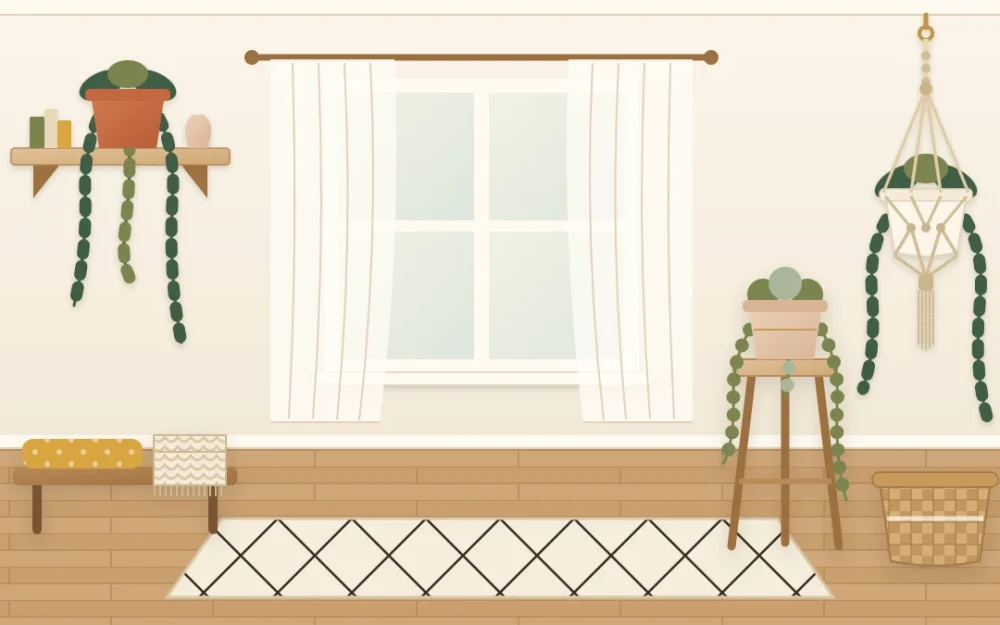
- A freestanding plant stand. A tall wooden or metal stand lifts a trailing pot to shoulder height with nothing fixed at all.
- A clothes-rail style frame. A freestanding rail lets you suspend two or three knotted hangers from the top bar and move the whole thing when you like.
- A high shelf. A trailing plant on an existing bookcase top or tall shelf gives the same falling line.
- A wall bracket. An arm fixed to the wall that holds one hanger out from the surface.
- A ceiling hook or a rail. A knotted hanger suspended from above, or several along a curtain-rod style rail.
Start at the top of that list. A stand or a rail frame gives you the look immediately, lets you test the position, and is the natural first choice if you rent. The piece on boho decor you can take with you has more movable ideas.
Step 2: Pick the spot
Choose the place before you choose the plant. Good positions share a few traits:
- Near a window, not across it. Beside the frame, the plant gets light and the window still opens, and curtains still draw. Directly in front of the glass, it blocks both.
- Never above the pillows. Keep anything suspended away from the head of the bed. A corner, the wall beside the dresser or the space over a chair is better. A trailing plant above a seat works especially well in a boho reading corner, as long as it is set to one side of where you sit.
- Out of the walking path. The lowest stems should sit above head height wherever people pass, and clear of any door swing.
- Within reach. You need to lift the pot down to water it. If you cannot reach it from a steady step stool, it is too high.
Step 3: Match the plant to the light
Height changes the light a plant receives. Up near the ceiling and off to the side of a window, a spot is often dimmer than it looks from below. Pothos and heartleaf philodendron are forgiving trailers for medium light; string-type succulents want a much brighter position right beside the glass.
For choosing plants by light and for pots that suit the palette, see the main guide to styling bedroom greenery as decor. For a dim corner, a good artificial trailing stem in a hanger is a perfectly reasonable answer.
Step 4: Keep the pot light and the drips contained
A suspended pot is heavier than it seems once the soil is wet, so reduce the load from the start:
- Use a lightweight pot: plastic, fiber or thin metal rather than thick ceramic or stone.
- Keep the plant in a plastic grower pot with drainage holes, set inside a slightly larger outer pot with no holes, or on a deep drip saucer that fits the hanger.
- Choose a modest size. A pot roughly 6 to 8 in (15 to 20 cm) across is a common starting point for a hanger.
- Water at the sink. Lift the plant down, water it, let it drain fully, then put it back.
Step 5: Put it up safely
If you have chosen a bracket, hook or rail, slow down here. There is no single fixing that suits every room, so this guide does not name one.
- Find out what the wall or ceiling is made of. The right hardware depends on the wall type or ceiling type.
- Add up the full weight: pot, plant, hanger and soil when it is wet.
- Choose a bracket, hook and fixing made for that surface and that weight, and follow the manufacturer instructions for each part exactly.
- Check the hanger itself. Knots should be tight, cords unfrayed and the ring sound.
- Test with the empty pot first, then with the plant, and look again after the first watering.
Before you hang anything
If you are unsure what your wall or ceiling is made of, or whether a fixing suits it, get help from someone qualified before you drill. In a rental, check your lease or ask before making changes. When in doubt, use a freestanding stand or rail frame instead.
Step 6: Arrange in odd numbers at staggered heights
One hanging plant is a quiet accent. Three is a feature. Two tends to look like a pair that is missing something, so odd numbers are the usual rule of thumb.
Stagger the heights rather than lining the pots up. A drop of roughly 8 to 12 in (20 to 30 cm) between neighbors lets each plant show its own outline. Vary the leaf type as well: one long trailer, one fuller and bushier, one with small leaves.
Tip
Before fixing anything, hold a hanger at the planned height or stand it on a stack of books on a chair, then step back to the doorway. Shifting the position a hand-width often makes the difference.
Step 7: Style the hangers and pots
The hanger is part of the decor. Knotted cotton cord in cream or natural is the classic choice, and macramé knotwork adds texture even when the plant is small. Jute cord is rougher and darker; leather-look straps and slim wooden rings read as more modern.
Keep the set related. Use one cord color for all the hangers, then let the pots vary a little within your palette: cream, clay and one terracotta, for example. If the room already has a woven wall hanging, plain hangers with few knots stop the textures from competing.
Trim trailing stems when they pass the point you like. Long stems that reach the floor or the bedding look neglected rather than lush, and a trim keeps the plant fuller at the top.
Frequently asked questions
Where should hanging plants go in a bedroom?
Beside a window rather than in front of it, in a corner, next to a dresser or to one side of a chair. Keep them away from the head of the bed, clear of door swings and above head height where people walk, and low enough that you can lift the pot down to water it.
Can I display trailing plants at height without drilling?
Yes. A tall freestanding plant stand, a clothes-rail style frame with knotted hangers on the top bar, or a pot on top of a bookcase all give the trailing look with nothing fixed to the building. They are also easy to reposition while you work out the best spot.
How do I water a plant in a hanger without drips?
Keep the plant in a plastic grower pot with drainage holes inside an outer pot or on a deep saucer. Lift it down, water it at the sink and let it drain completely before returning it. This also keeps the suspended pot as light as possible.