Seasonal Boho Bedroom Decor: A Simple Swap System
A four-point swap system for changing a boho bedroom with the seasons: two pillow covers, the throw, the bedside stems and one small piece, with a palette for each season and one flat box of storage.
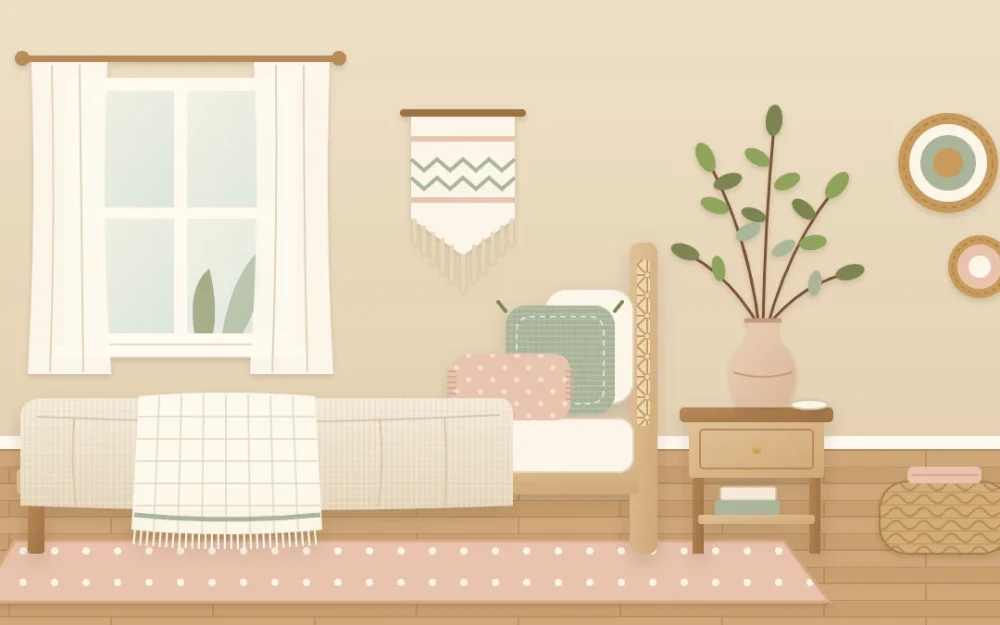
Changing a bedroom with the seasons does not take a closet full of decorations. Most seasonal boho bedroom decor comes down to a handful of textiles and a vase, and the rest of the room can stay exactly as it is all year.
The system here uses four swap points. You change only those, four times a year, and the set that is out of season fits in one flat box. Each change takes about fifteen minutes.
Why a swap system beats a collection
A boho bedroom already has a base that belongs to no season: cream or sand bedding, wood, a jute or flat-woven rug, clay pots, woven pieces. None of that needs to move.
What signals the time of year is much smaller. It is the accent color, the weight of the fabric you can see and whatever is standing in the vase. Change those three signals in a few fixed places and the whole room reads differently, while a box of themed ornaments mostly adds clutter.
The four swap points
Choose your four spots once and keep them the same all year. These work in almost any bedroom:
- Two pillow covers. Keep the inserts and change only the covers. Two is enough to shift the color of the bed; the guide to mixing boho throw pillows shows where they sit in the arrangement.
- The throw. One throw, at the foot of the bed or over a corner. This is where fabric weight changes most visibly.
- The bedside vase. The same clay vase, with different stems in it.
- One small shelf or dresser piece. A small print leaning in its frame, a bowl of gathered natural objects or a pot in the season’s accent color.
Everything else stays put. If you feel tempted to add a fifth point, swap it for one of the four instead.
A palette for each season
Each seasonal palette is two accent colors laid over your earth-tone base. Treat the table as a set of ideas, not rules, and adjust the shades to the ones your room already holds.
| Season | Accent colors | Fabrics | In the vase |
|---|---|---|---|
| Spring | Sage green and blush | Cotton gauze, light linen | Fresh green branches |
| Summer | Cream and ochre | Washed linen, thin waffle cotton | Tall grasses |
| Fall | Rust and warm brown | Brushed cotton, a woven wool-look throw | Dried stems and seed heads |
| Winter | Cream and deep green | Chunky knit, tufted cotton | Pine sprigs |
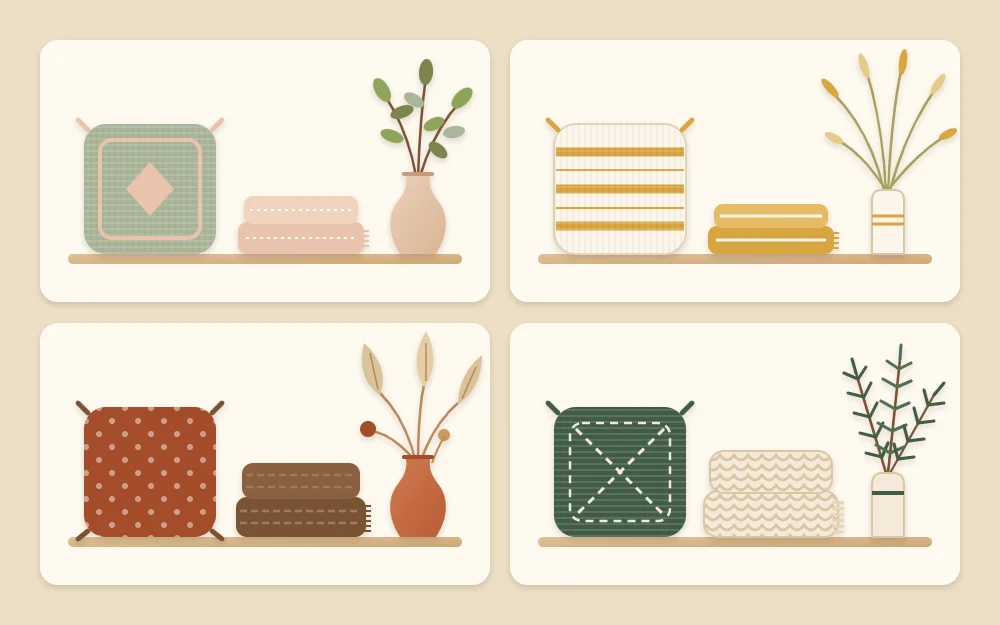
Whatever you choose, keep the undertone warm. A dusty blush sits easily with terracotta and sand, where a cool, bright pink would fight them. The same goes for green: sage and forest belong with earth tones, sharp lime does not.
Natural materials through the year
The vase is the cheapest signal to change and often the strongest one, because the stems come from the season itself.
- Spring: a few budding or leafy branches, cut long so they arch above the vase.
- Summer: tall green or golden grasses, loosely arranged.
- Fall: dried grasses, seed heads and muted dried flowers. The guide to dried flowers and grasses covers which stems last and how to proportion them.
- Winter: pine or other evergreen sprigs, or bare twigs on their own.
Three to five stems are plenty for a bedside vase. Change the water for fresh material every few days and stand the vase on a small dish to protect the table.
Good to know
Keep dried stems, grasses and evergreen sprigs well away from heaters, lamp bulbs and any flame. Evergreens shed needles as they dry, so replace them once they start to drop.
Lighter and heavier fabrics
Fabric weight does as much as color. The same cream reads as summer in thin gauze and as winter in a chunky knit, so you can change the season without changing the palette at all if you prefer a very calm room.
In the warm months, choose fabrics you can almost see through and remove the extra layer folded at the foot of the bed. In the cold months, bring that layer back and pick textures with depth: knits, tufting, a brushed surface. For the full cold-season approach, including light and rugs, see the cozy boho bedroom ideas for fall and winter.
Storing the off-season set
One swap set is small: two pillow covers, one throw, perhaps a small print or pot. Folded flat, it fits in a shallow lidded box or a basket with a lid, under the bed or on a closet shelf.
- Wash the textiles and let them dry completely before they go in.
- Fold the throw around the small piece to cushion it.
- Keep all three resting sets together, so swap day means opening one container.
The box is also your limit. If a new seasonal piece does not fit, something already in there has to go. That one rule is what stops a swap system from turning back into a collection.
Tip
Swap when the weather actually turns where you live, not on a calendar date. The room feels right when it matches what you see out of the window.
What to leave alone
Keep the rug, the main bedding, the wall above the bed, the lamps and the furniture constant. They are the base that makes four different seasons still look like one room.
If a season’s version feels off, the cause is usually one accent too many. Take the newest addition away, step back to the doorway and look again before you change anything else.
Frequently asked questions
How often should I change seasonal bedroom decor?
Four times a year is enough for most people, and twice a year, a warm set and a cold set, also works well. Let the weather where you live decide the moment rather than a date. With only four swap points, each change takes a few minutes.
What should I swap first if I only change one thing?
The throw. It changes both color and fabric weight in one move, it is easy to store and it is visible from the doorway. If you want a second step, change what stands in the bedside vase, since natural stems are the clearest sign of the time of year.
Do seasonal colors clash with an earth-tone palette?
Not if you keep the undertones warm and limit yourself to two accents at a time. Sage, blush, ochre, rust and deep green all sit comfortably over cream, sand and wood. Cool, very bright shades are the ones that tend to look out of place against an earthy base.