Natural Textures in a Boho Bedroom: Rattan, Jute, Linen and Wood
A field guide to the natural materials behind the boho look, from rattan and jute to linen, wool, wood and clay, with a simple formula for combining three to five of them.
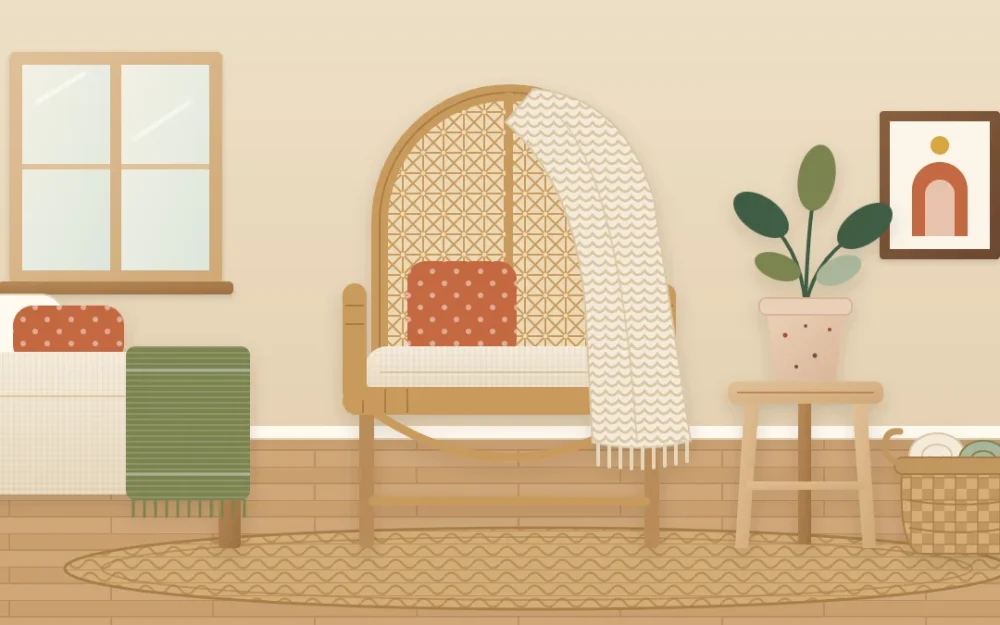
Take the color out of a good boho bedroom and it still feels warm. That is the work of natural textures: the open weave of cane, the rough braid of a jute rug, the soft crumple of linen, the grain of a wooden stool. They give the room something to look at up close and something to touch.
You do not need every material at once. What follows is a short field guide to the main ones, what each looks like, where it earns its place in a bedroom and what to put beside it, followed by a simple way to combine them.
The materials at a glance
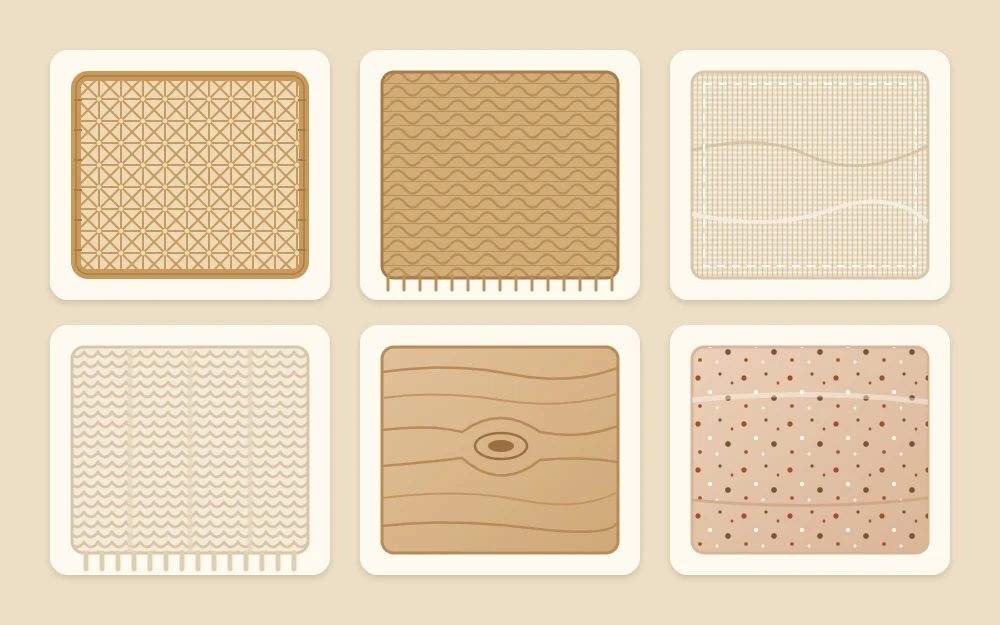
| Material | Look and feel | Where it works | Pairs well with |
|---|---|---|---|
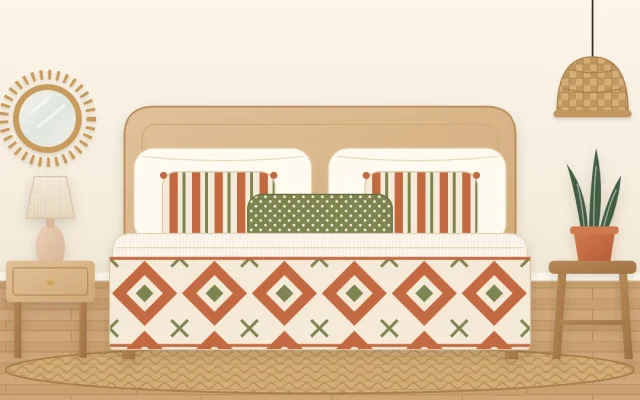
| Rattan and cane | Golden, open, airy weave | Headboard, chair, mirror frame, lamp shade | Linen, plain cotton |
| Jute and sisal | Rough, matte, sandy brown | Rugs, baskets, pouf | Wool, smooth wood |
| Seagrass | Smooth strands, slight sheen | Baskets, plant covers, small rugs | Clay, cotton |
| Linen | Soft, crumpled, matte | Bedding, curtains, cushion covers | Rattan, wool, wood |
| Cotton | Smooth, gauzy, tufted or fringed | Sheets, quilts, throws | Almost everything |
| Wool | Thick, nubby, warm | Throws, pillows, rugs | Jute, linen, leather-look pieces |
| Wood | Solid, grained, raw or oiled | Bed frame, stool, shelf, frames, bowls | Every textile |
| Clay and ceramic | Matte or glazed, cool to the touch | Pots, vases, lamp bases, dishes | Wood, dried stems, seagrass |
Woven plant fibers: rattan, cane, jute, sisal and seagrass
Rattan and cane
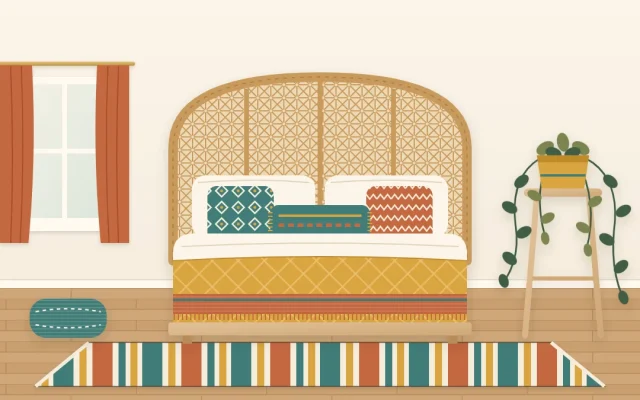
Rattan is a climbing palm whose stems are bent into furniture frames; cane is the thin outer layer, usually woven into the open, honeycomb-like webbing you see on headboards and chair backs. Both are light in color and in visual weight, because you can see through them. Use them where you want presence without bulk: a headboard, a chair in the corner, a round mirror frame, a woven lamp shade.
Jute and sisal
These are the rough ones. Jute is the softer of the two, with a slightly fuzzy, braided look; sisal is firmer and more wiry. Both are matte and sandy in color, which makes them a natural base layer on the floor. A braided jute rug under the bed gives a quiet, textured ground for a patterned rug or a bright quilt. The guide to choosing and layering bedroom rugs explains how to size and place one.
Seagrass
Seagrass is smoother than jute, with a faint natural sheen and a color that leans a little green when new. It appears most often as baskets: a belly basket as a plant cover, a lidded basket for blankets, a flat tray on the dresser. Because it has that slight shine, it is a useful contrast to very matte materials.
Soft textiles: linen, cotton and wool
Linen is the signature boho bedding fabric because it looks better slightly rumpled. Its texture is fine and dry, so it reads as calm from a distance and interesting up close. Use it for the largest soft surfaces: a duvet cover, curtains, a pair of pillow covers.
Cotton is the most flexible material in the room. The same fiber can be a smooth sheet, a gauzy throw, a quilt with visible stitching, a tufted pillow or a fringed blanket, so it can play either the smooth or the textured part depending on what you need.
Wool brings the thickest texture: chunky knits, nubby weaves, shaggy rugs. A little goes a long way. One wool throw at the foot of the bed adds more visible texture than three flat cotton ones. For ways to place it, see the guide to draping and folding throw blankets.
Hard materials: wood, clay and ceramic
Wood is the solid counterweight to all the weaving. A bed frame, a stool used as a bedside table, a shelf, a picture frame or a bowl each add grain and a deeper brown that the lighter fibers lack. Wood tones do not have to match, and mixing them well is a topic of its own: the guide to mixing wood tones and finishes covers it.
Clay and ceramic are the cool, smooth notes. Unglazed terracotta and speckled stoneware are matte and earthy; a glazed pot or vase adds the small amount of shine a room full of rough fibers needs. Pots, vases, lamp bases and small dishes are the easy places for them.
A simple formula for combining them
Too few textures and the room looks flat; too many and it looks like a market stall. As a loose guide, choose three to five textures and build the room from those.
- Choose your three to five. A common starting set is linen, jute, wood and clay, with wool or rattan as the fifth.
- Mix rough with smooth. Put a nubby throw on smooth sheets, a rough basket beside a sleek ceramic lamp, a jute rug under a polished wooden stool.
- Keep it mostly matte, with a little sheen. One or two things that catch light, such as a glazed vase, seagrass or an oiled wood surface, stop the room from looking dusty.
- Repeat each texture at least twice. Rattan in the headboard and again in a mirror frame. Clay in a lamp base and again in a pot across the room. A material that appears once looks stray.
- Spread them out. Check that the floor, the bed, the furniture and the wall each have some texture, so it is not all piled on the bed.
Tip
Stand in the doorway and name the textures you can see. If you count more than five, remove the one that appears only once. If you count two, add something rough on the floor or something woven on the wall.
Where to start if the room feels flat
If your bedroom has smooth walls, smooth bedding and flat-fronted furniture, three additions change it fastest, in this order:
- A textured rug. Braided jute or a chunky wool rug covers the largest surface, so it has the biggest effect.
- One heavy throw. A knitted or tufted throw on the bed breaks up flat bedding at once.
- One woven piece at eye level. A rattan mirror frame, a cane headboard or a basket on a shelf carries the texture up from the floor.
After that, add slowly. Each new piece should either repeat a texture you already have or supply the contrast that is missing: rough where everything is smooth, a touch of sheen where everything is matte.
Frequently asked questions
How many textures should a boho bedroom have?
Three to five is a workable range for most rooms. Fewer than three tends to look flat, and more than five starts to feel busy. Repeat each texture at least twice in different parts of the room, so that every material looks chosen instead of left there by chance.
What is the difference between rattan and cane?
Rattan is the whole stem of a climbing palm, bent and joined to make furniture frames. Cane is the thin outer skin of that stem, cut into strips and woven into open webbing for chair backs, headboards and cabinet doors. They come from the same plant and look natural together.
Is a jute rug comfortable in a bedroom?
Jute is the softer of the rough plant fibers, but it is still coarser underfoot than wool or cotton. Many people use it as a large base rug and layer a smaller, softer rug on top where their feet land beside the bed, which gives both the texture and the comfort.