Boho Throw Blankets: Ways to Drape, Fold and Layer Them
Five ways to place a throw so it looks casual instead of messy or stiff, with notes on which fabrics fold and which drape, how to choose a color, and how many throws one bedroom needs.
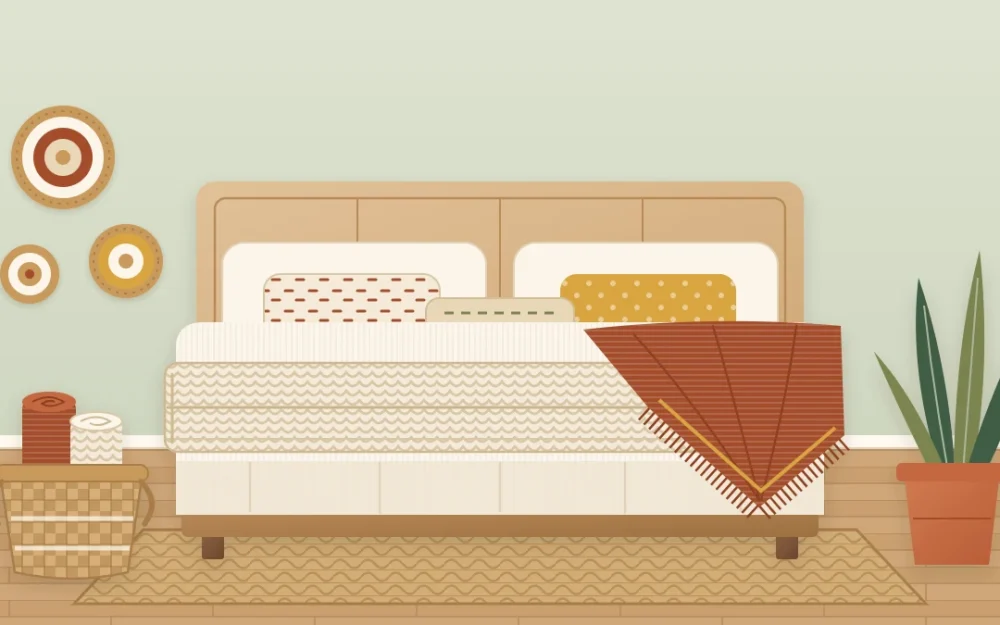
A throw is the smallest layer on the bed and the one that gives the room away. Folded too neatly, it looks like a hotel. Dropped in a heap, it looks like laundry. Somewhere in between is the casual, lived-in placement that makes a bedroom feel finished.
The good news is that boho throw blankets are the easiest layer to get right, because nothing is fixed. You can move one in ten seconds, try it somewhere else and change it again tomorrow. Five placements cover almost every situation, and each has a small trick that keeps it on the right side of messy.
Start with the fabric
How a throw behaves depends on what it is made of. Heavy, structured fabrics hold a fold; light, loose ones want to be draped.
- Chunky knit: thick, soft and sculptural. It looks best folded once and laid loosely, where the stitches can be seen.
- Waffle weave: a grid texture with a matte finish. Tidy enough to fold, relaxed enough to drape.
- Fringed cotton: flat-woven with tassels or fringe at the ends. Made for draping, since the fringe is the detail.
- Woven wool-look: dense and warm, often in a stripe, check or diamond. Holds a crisp fold across the foot of the bed.
- Gauze: light, crinkled and airy. A warm-weather throw that only works loose.
Each of these adds a surface the sheets and duvet do not have, which is the real purpose of a throw. For how these fabrics sit alongside rattan, jute and wood, see this guide to natural textures in a boho bedroom.
Five placements that look casual, not careless
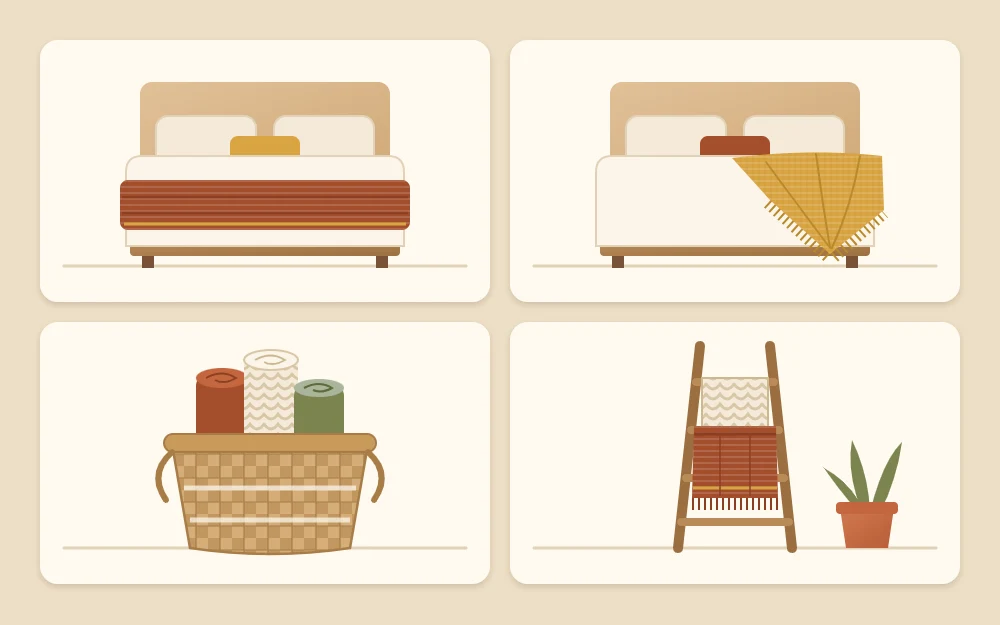
1. Folded in thirds across the foot
Fold the throw lengthwise into thirds and lay it across the lower part of the bed, with the ends hanging evenly on both sides. To keep it from looking stiff, leave the folded edge soft and let one end fall a little lower than the other. Best for woven wool-look and waffle throws.
2. Draped diagonally over a corner
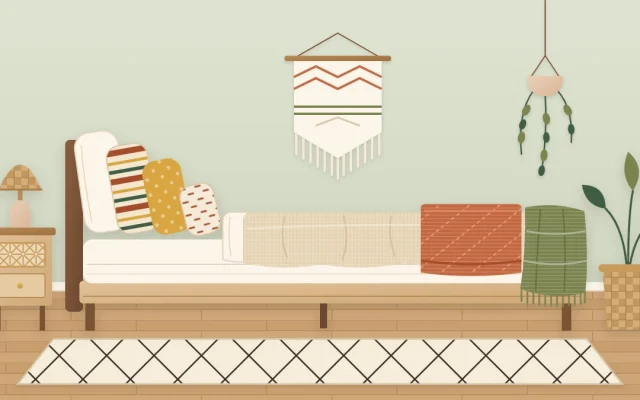
Hold the throw by the middle of one long edge, let it fall into loose folds, and lay it over a bottom corner of the bed so one end trails toward the floor. Adjust it once, then stop. Best for fringed cotton and gauze.
3. Layered over a folded quilt
If the bed already has a quilt or coverlet folded at the foot, place the throw on top of it, folded narrower so the layer beneath shows on both sides. Two textures in two tones give a deep band of color at the end of the bed. The full order of layers is explained in this guide to layering boho bedding.
4. Rolled in a basket
Fold the throw in half lengthwise, roll it loosely and stand it on end in a woven basket beside the bed or a chair. Two or three rolled throws in related tones look generous and stay easy to reach.
5. Hung on a leaning ladder or a chair
A throw folded over a rung of a leaning wooden blanket ladder, or over the back or arm of a chair, adds softness away from the bed. Put the heaviest throw on the lowest rung and leave at least one rung empty.
Good to know
A leaning ladder should stand where it cannot be knocked over, away from doors and walkways. Follow the maker’s guidance on securing it, and keep throws clear of heaters and lamps.
Choose the color one of two ways
A throw can do one of two jobs, and it helps to decide which before you pick a color.
- The accent. The throw carries the deepest or strongest color in your palette: rust on a cream bed, forest green on sand. It becomes a small focal point, so repeat the color at least once more, on a pillow or a pot.
- The texture. The throw matches the base tone of the bedding and stands out only through its surface: a chunky cream knit on cream linen. Quieter, and a good choice when the pillows or rug are already colorful.
With two throws, give them one job each: a textured one in the base tone and a thinner one in the accent color.
Match the size to the bed
A standard throw of about 50 by 60 in (127 by 152 cm) suits a chair, a basket or a corner drape on any bed. Folded across the foot, it reaches the edges of a twin or full bed but can look short on a queen or king.
For wider beds, either choose an oversized throw or stop trying to span the full width: fold the throw smaller and place it off-center on purpose, or use the corner drape. A throw that almost reaches both sides looks like a mistake; one that clearly sits on one side looks like a choice.
Know when you have enough
One throw on the bed is enough. Two is the comfortable maximum, and only when they differ in texture and placement, such as one folded and one draped. Any more should live elsewhere: one on a chair, one or two in a basket.
As a rough ceiling for the whole bedroom, think three or four. In colder months you may want the upper end and heavier fabrics; these cozy boho bedroom ideas for fall and winter show how to add warmth without crowding the room.
Small habits that keep throws looking good
- Shake a throw out before you place it, so the folds fall freshly.
- Comb fringe straight with your fingers after washing.
- Refold along a different line now and then to avoid a permanent crease.
- Move the bed throw to its basket at night so it does not end up on the floor.
- Follow the care label, since knits and loose weaves can stretch or snag.
Frequently asked questions
How do I drape a throw so it does not look messy?
Start from a tidy bed, because a loose throw only looks deliberate against straight layers. Hold the throw by the middle of one long edge, let it fall into natural folds and lay it over one bottom corner. Adjust it once and leave it. Fussing with every fold usually makes it look worse.
What size throw do I need for a queen bed?
A standard throw works on a queen if you drape it over a corner or fold it small and place it off-center. To fold a throw across the full width of the foot with the ends hanging down, look for an oversized throw or use a folded blanket or coverlet instead.
Should a throw match the pillows?
It should share a color with something on the bed, but it does not need to match exactly. A throw in the deepest tone of the pillows ties the bed together. Alternatively, choose a throw in the same tone as the bedding and let its texture provide the contrast instead of its color.