Boho Bedding Ideas: How to Layer a Relaxed, Textured Bed
Build a layered boho bed in five steps, from plain sheets to a single throw. Learn which fabrics to mix, how to keep the finish relaxed, and a two-minute routine that keeps the layers practical.
At a glance
- Difficulty
- Easy
- Time
- About 15 to 20 minutes the first time, then a couple of minutes each morning
- Best for
- Any bed that looks flat or too matched
- Renter note
- No fixings needed
What you need
- Plain sheets in a light base tone
- Washed or textured duvet cover or quilt
- Quilt, coverlet or blanket to fold at the foot
- Sleeping pillows
- Three to five decorative pillows
- One throw in a contrasting texture
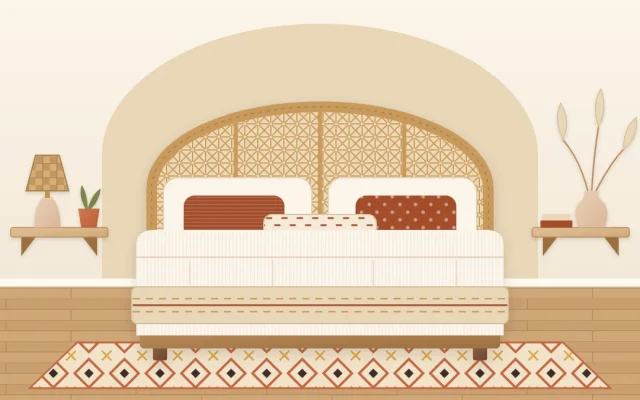
The bed takes up more of the room than anything else, so it sets the tone before a single thing goes on the wall. Boho bedding is less about one special duvet set and more about how several plain, textured layers sit together: slightly rumpled, clearly comfortable and held together by color.
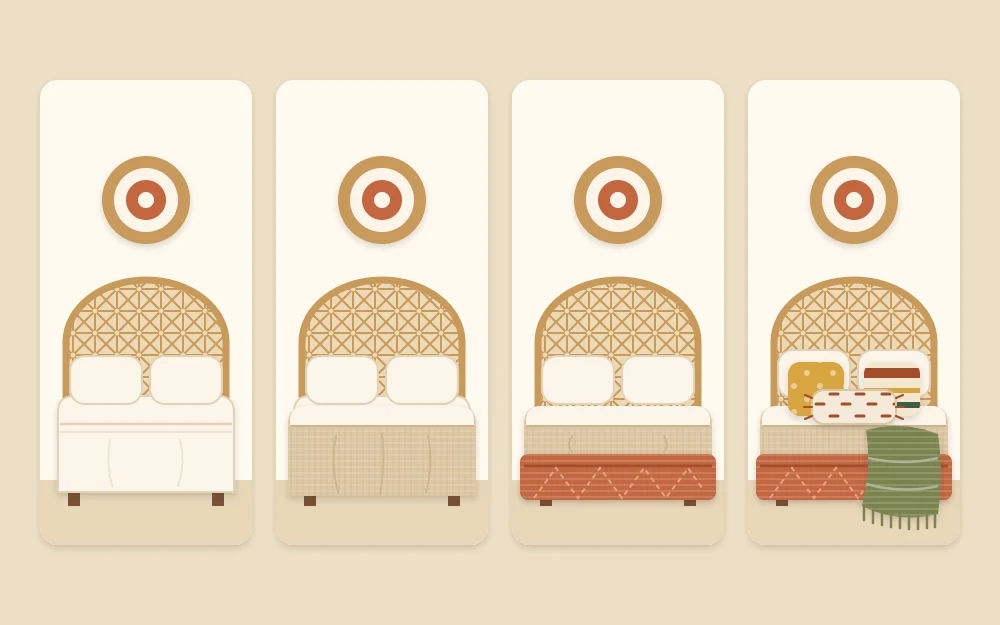
That layered look can seem like a lot of fabric to manage. It is easier once you see it as five layers added in a fixed order, each with one job. Build them from the mattress up.
Settle the colors before the fabrics
Choose three tones from the room before you choose a single piece: a light base (cream, warm white or sand), a mid tone (clay, terracotta, ochre or olive) and one deeper accent (rust, forest green or chocolate). The light base covers most of the bed, the mid tone takes one or two layers, and the accent appears in small amounts.
Keeping to three tones is what stops a many-layered bed from looking like a laundry pile. Texture can vary freely; color should not.
The five layers, in order
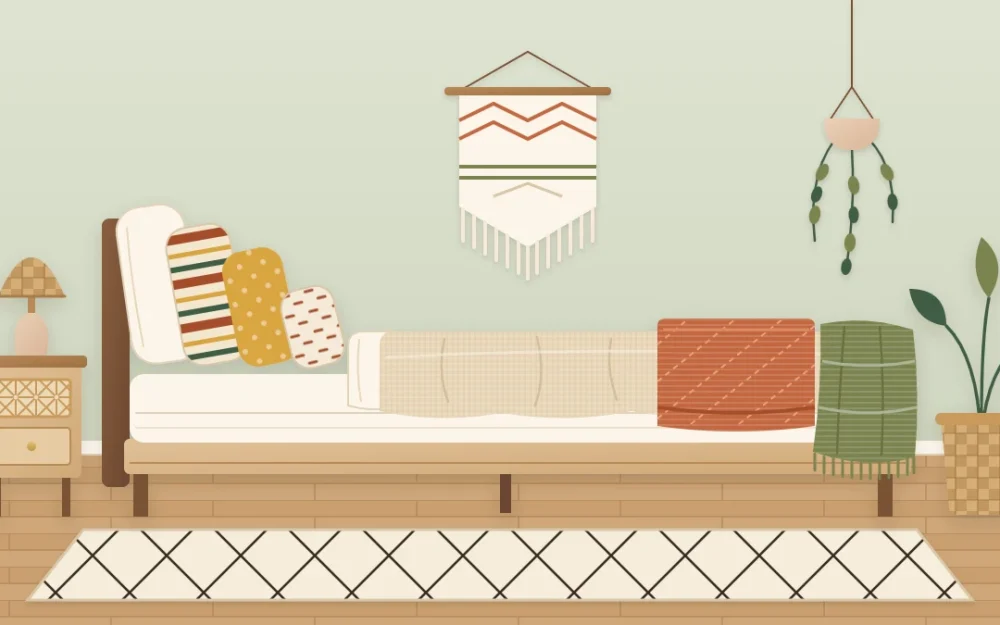
- Plain sheets. Start with breathable sheets in the light base tone: cotton percale, cotton gauze or linen. Plain sheets give the eye a quiet surface, and they show at the fold-back, so they frame everything above them.
- The main cover. A duvet or a large quilt in a washed or textured fabric. Washed linen, stonewashed cotton and waffle weaves all look better slightly creased, which is the point. Keep it light or mid-toned and plain, or with a very quiet pattern.
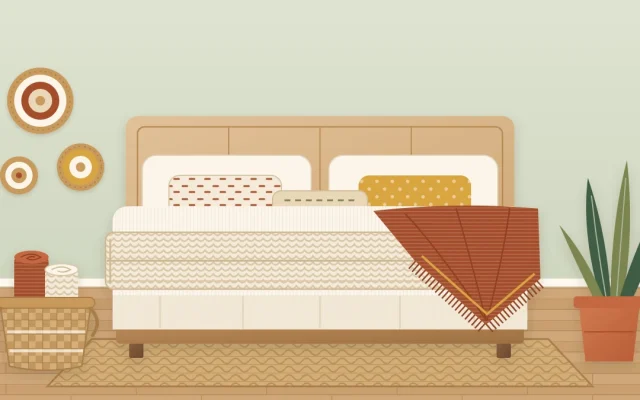
- A second layer at the foot. Fold a quilt, coverlet or blanket in thirds and lay it across the lower third of the bed. This is where the mid tone or a pattern belongs. It adds a band of color and gives you an extra layer on cold nights.
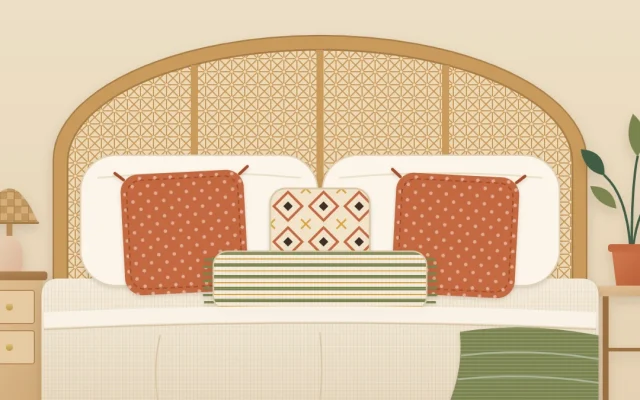
- Pillows, large to small. Sleeping pillows at the back, then decorative ones in front, finishing with three to five pillows in mixed sizes. The guide to arranging boho throw pillows covers sizes, numbers and how to mix them.
- One throw. A single throw in a contrasting texture, draped over a corner or laid across the folded layer. It carries the deep accent color. For placements that look casual without looking messy, see these ways to drape and fold a throw blanket.
Mix fabrics so the layers read as separate
If every layer is the same smooth cotton, the bed looks flat no matter how many pieces are on it. Aim for at least three different surfaces:
- Linen: matte, slubby and softly creased. Good for the main cover or the pillowcases.
- Cotton gauze: light, crinkled and airy. Good for sheets or a warm-weather top layer.
- Quilted cotton: stitched lines or diamonds that add pattern through texture alone. Ideal for the folded layer.
- Tufted cotton: raised dots, lines or diamonds. Use it once, on a pillow or a coverlet, as the standout texture.
- Knit or woven wool-look: the heaviest surface, best kept for the throw.
A simple check: put a smooth layer next to a rough one, and a flat one next to a raised one. If two neighbors feel alike, change one.
Tip
Want pattern as well as texture? Limit it to one or two layers, such as the folded quilt and one pillow, and keep the rest plain. The scale formula for mixing patterns in a boho bedroom shows how to pair them.
Aim for relaxed, not hotel-tight
A boho bed should look as if someone enjoys sleeping in it. A few habits create that:
- Pull the main cover up loosely and fold the top edge back by roughly 12 in (30 cm) to show the sheets.
- Let the cover hang unevenly at the sides. Skip sharp tucked corners.
- Leave the folded layer a little off-square, with one edge soft.
- Do not iron linen or gauze. Shake it out and smooth it by hand.
Relaxed is not the same as untidy. The difference is the base: when the sheets are smooth and the big layers are straight, small imperfections on top look deliberate.
What sits behind the bed matters too
Layers need something to lean against. Pillows propped against a bare wall slide down and leave a gap, and the whole arrangement loses height. A rattan, wood or fabric panel gives the pillows a backdrop and sets the upper edge of the bed’s shape. If your bed has none, these boho headboard ideas include several looks that need no headboard at all.
A two-minute morning routine
Layers only last if making the bed is quick. This order takes about two minutes once it is a habit:
- Move the decorative pillows and the throw to a chair or a basket.
- Shake the main cover and pull it up, then fold the top edge back.
- Flip the folded layer back into place at the foot. If you never unfolded it, it only needs straightening.
- Stand the sleeping pillows up, add the decorative ones in front and drop the throw over a corner.
If that still feels like too much on a weekday, cut the decorative pillows to two and keep the rest. The folded layer and the throw do most of the visual work.
Quick fixes for common problems
- The bed looks flat. Add one raised texture, tufted or quilted, and stand the back pillows upright.
- It looks busy. Count the colors. Remove anything outside your three tones.
- It looks stiff. Loosen the folds and take away one matching item.
- It looks heavy. Swap the folded layer for a lighter gauze or coverlet and choose a thinner throw.
Frequently asked questions
Does boho bedding have to be patterned?
No. Many of the calmest boho beds use plain fabrics only and rely on texture: creased linen, crinkled gauze, quilting and tufting. If you like pattern, keep it to one or two layers, usually the folded quilt at the foot and one pillow, and make sure its colors match the rest of the bed.
What colors work best for a layered boho bed?
A light warm base such as cream or sand for the sheets and main cover, one earthy mid tone such as terracotta, clay or olive for the folded layer, and a small amount of a deeper accent such as rust or forest green on the throw. Three tones is a comfortable limit for most beds.
How do I stop a layered bed from looking messy?
Keep the base tidy and let only the top be loose. Smooth the sheets, straighten the main cover and fold the foot layer in neat thirds. After that, a rumpled throw and slightly uneven pillows look intentional. Limiting the bed to three colors also makes creases and soft folds read as relaxed.