Dried Flowers and Grasses for a Boho Bedroom
Which dried stems suit a boho bedroom, how to match them to a vase, where to place arrangements, and how to keep them dusted, away from heat and looking fresh.
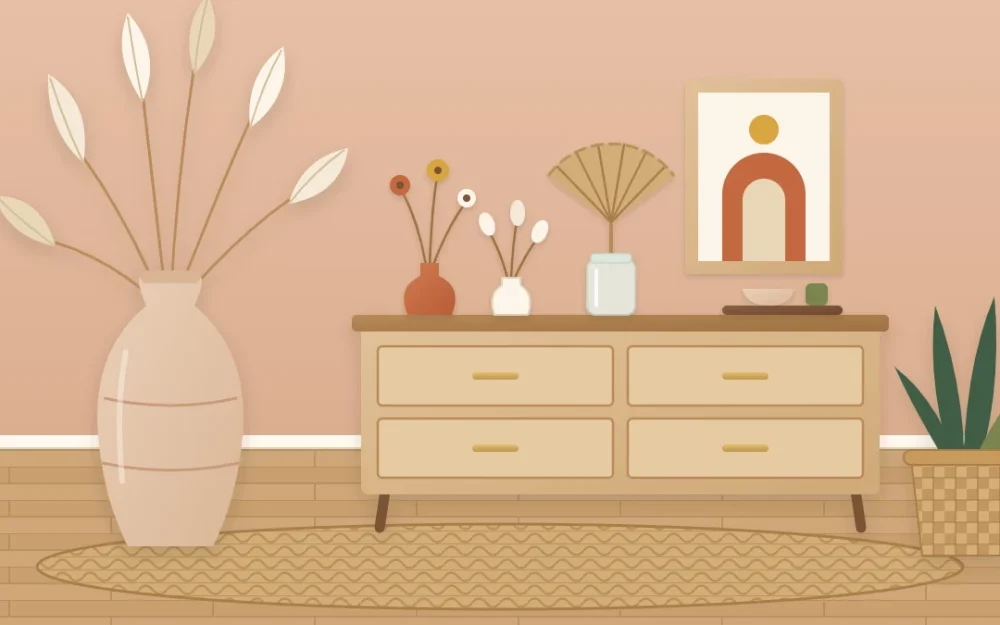
Some of the most recognizable boho shapes are not alive at all. A tall vase of feathery grass, a fan-shaped leaf in a jar, a few seed heads in a bud vase: dried flowers and grasses give a bedroom soft, sculptural lines in exactly the sandy, muted tones the style is built on.
They also ask very little of you. There is no watering, no window to compete for and no drooping after a week away. What they do need is a suitable vase, a sensible position and an occasional light dusting.
Stems that suit the look
You do not need many kinds. Two or three types, in one arrangement or spread around the room, is plenty.
- Feathery plume grasses. Tall, soft and pale, these are the statement stems for a floor vase.
- Bunny-tail style grasses. Short stems with small fluffy heads, good in bud vases and on a bedside table.
- Seed heads and pods. Round or spiky shapes on stiff stalks that add darker brown accents and a graphic outline.
- Dried palm-style fans. Flat, pleated leaves that work almost like a small piece of wall art standing in a jar.
- Dried flowers in muted tones. Small clustered blooms in dusty pink, faded rust, cream or soft purple, for a little color.
- Bare or bleached branches and wheat-like stalks. Fine vertical lines that fill out a bunch without adding bulk.
Stay inside your room palette. Natural straw, cream, tan and brown go with everything. Dyed stems in bright colors tend to fight with earthy bedding, so treat them with caution.
Match the vase to the stems
Proportion is what separates an arrangement from stems stuck in a pot. A common rule of thumb is to let the stems stand roughly one and a half to two times the height of the vase. Shorter than that and the bunch looks swallowed; much taller and it looks top-heavy.
- Tall clay floor vase. A vase around 16 to 24 in (40 to 60 cm) high with a narrow neck holds tall grasses upright and gives a floor corner real presence.
- Small bud vases. One to three stems each. Group two or three vases of different heights rather than standing one alone.
- A jar or wide-mouthed pot. Suits a single fan leaf or a loose, generous bunch.
- A wall pocket or hanging basket. A flat woven pocket holding a small spray of stems, used as wall decor.
Matte, unglazed and slightly rough finishes suit dried stems better than glossy ones. A narrow neck does the arranging for you by holding the stalks together. If the vase mouth is wide, tie the bunch loosely with twine below the rim line.
Before you hang anything
A wall pocket is light, but it still needs a fixing chosen for your wall type and the weight of the pocket and its contents, used as the manufacturer instructs. Keep it away from the wall directly above the pillows.
Where arrangements work in a bedroom
Dried stems are fragile and they shed if brushed, so the best places are visible but out of the way.
- The dresser. A medium vase at one end, balanced by something low at the other, such as a tray or a stack of books.
- The bedside. A bud vase with two or three short stems is the natural element in a simple bedside formula. Keep it short so a reaching hand does not catch it.
- A floor corner. The tall clay vase belongs beside a dresser or in a corner you do not walk through, not next to the door.
- A shelf. One small arrangement per shelf is enough; let the stems rise into the empty space above.
Avoid spots in direct sun, which fades color quickly, and anywhere damp. Give tall grasses clearance from curtains and bedding that move.
Mixing dried stems with living plants
Dried and living plants look best together when each has a different job. Let the living plants supply green and fullness, and the dried stems supply height, pale color and fine lines. A leafy plant in a basket with a floor vase of grasses beside it is a classic pairing: one round and dark, one tall and light.
Keep them in separate containers, since dried stems should stay dry. Dried arrangements are also the answer for corners where nothing will grow; the guide to styling bedroom greenery explains how to judge the light a spot really gets.
Common problems and quick fixes
The arrangement looks thin
Add stems in odd numbers until the vase neck is comfortably full, or move the bunch to a vase with a narrower opening. Mixing one fine stem type with one fuller type fills gaps faster than adding more of the same.
Everything is the same height
Pull a few stems up and trim others down so the tips sit at three levels. Cut dry stalks with sharp scissors, a little at a time.
The grass sheds fluff
Some shedding is normal, especially at first. Give new plumes a gentle shake outdoors before arranging them, and then leave them alone. Stems that are moved often shed most.
It looks like too much
Remove the smallest arrangement in the room first. One large floor vase and one small bedside vase usually reads better than five little bunches.
Keep them clear of heat and flame
Dried plant material is very dry by nature, so placement matters. Keep every arrangement well away from heaters, radiators and lamp bulbs, and never stand one beside a flame. If you like candlelight near your stems, use flameless LED candles there instead of real candles.
Leave space between tall grasses and any lamp, too. Stems should not touch or lean toward a shade or bulb.
Dusting and knowing when to replace them
Dust is the main upkeep. Every few weeks, carry the arrangement outside or hold it over a sink and shake it very gently, or brush sturdy stems lightly with a soft, dry paintbrush. Do not use water or a damp cloth.
Dried stems do not last indefinitely. Replace them when the color has faded to gray, when heads drop or crumble at a touch, or when dust no longer shakes out. Many people refresh one bunch as part of a seasonal swap of a few small pieces, which keeps the room feeling current with very little effort.
Frequently asked questions
How long do dried flowers and grasses last?
It varies with the stem type, the light and how often they are handled, so there is no fixed lifespan. Kept dry, out of direct sun and left undisturbed, many arrangements look good for a long time. Replace them when colors turn gray, heads crumble or dust will not shake out.
How tall should dried stems be compared with the vase?
A common rule of thumb is stems about one and a half to two times the height of the vase. Trim a little at a time with sharp scissors, and set the tips at two or three slightly different levels so the bunch looks natural rather than cut straight across.
Where should I not put dried arrangements?
Keep them away from heaters, radiators, lamp bulbs and any open flame, because dried plant material is very dry. Avoid direct sun, which fades them, damp spots, and places where people or curtains brush past, since fragile stems shed and break when they are knocked.