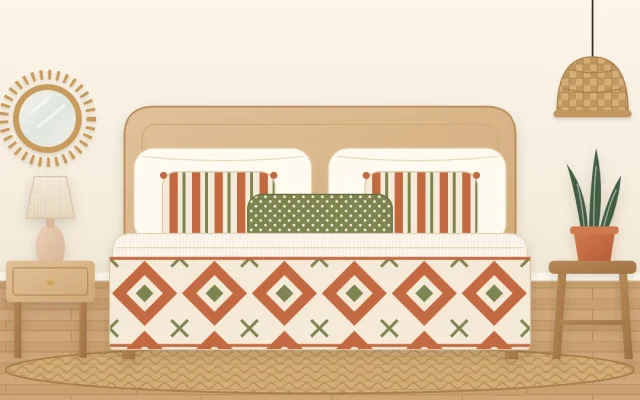
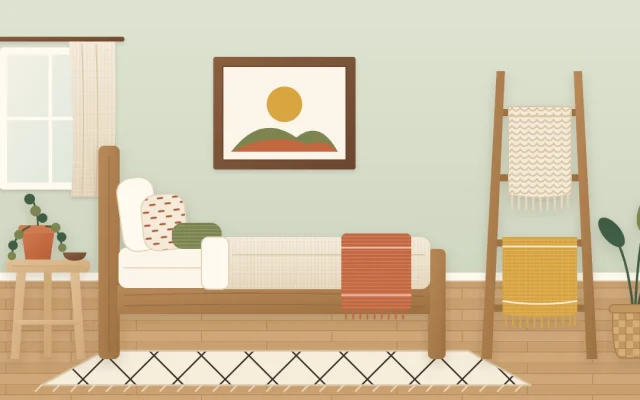
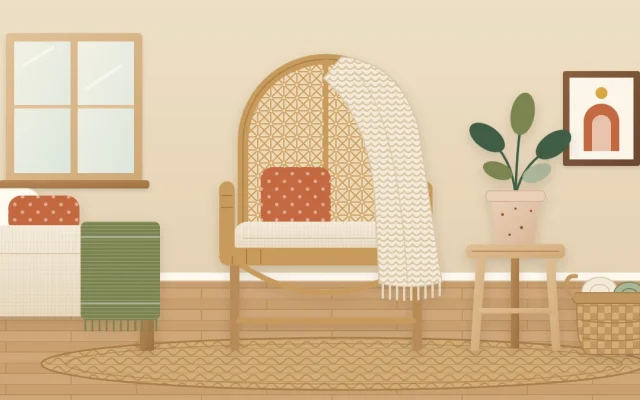
Earth-Tone Bedroom Palette: How to Build a Boho Color Scheme
How to choose one light base, one or two mid tones and one deep anchor from the earth-tone family, how much of each to use, and three example palettes to borrow.
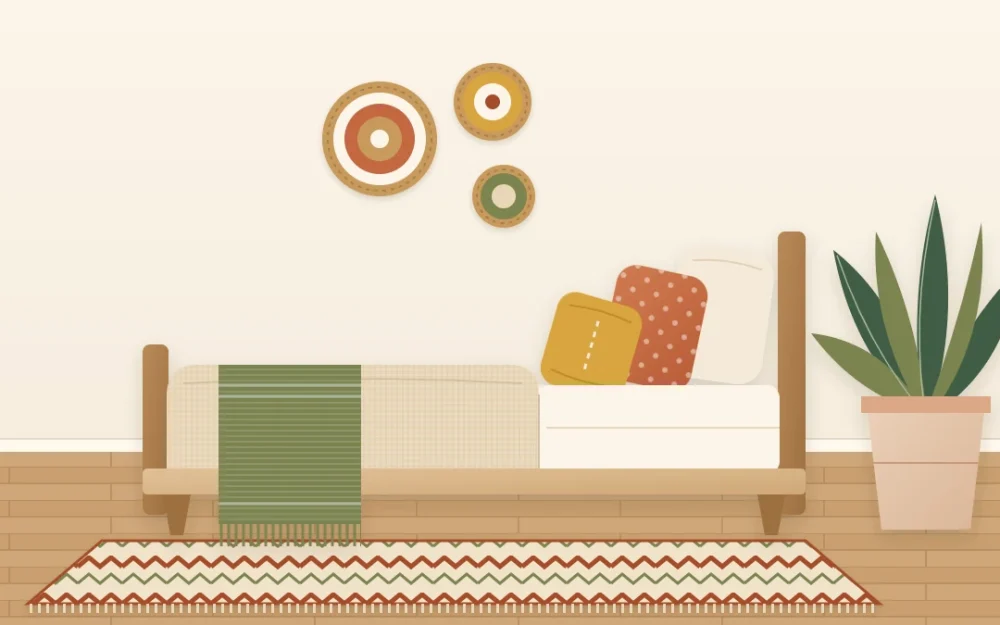
Warm boho colors are easy to love and surprisingly easy to get wrong. Terracotta, ochre, olive, rust and chocolate all look right in isolation, and then five of them arrive in one room and compete. An earth-tone bedroom palette solves that by giving each color a job and a share of the room.
You need only three or four tones, chosen in a set order: one light base, one or two mid tones and one deep anchor. Here is how to pick them, how much of each to use and how to carry them from the bed to the floor and the wall.
What counts as an earth tone
Earth tones are colors that resemble soil, clay, sand, stone, bark and dry or living plants. They are muted rather than bright, and in a boho room they lean warm. If you want the wider definition, this overview of what earth tones are is a useful reference. For a bedroom, sort them into three groups:
- Light bases: cream, warm white, ivory, oatmeal, sand.
- Mid tones: clay, terracotta, ochre, olive, camel, warm brown.
- Deep anchor tones: rust, forest green, chocolate, deep umber.
Read the fixed elements first
Your palette has already been started by the things you are not changing: the floor, the wall color, the bed frame and any large furniture. Look at each one and name its color plainly. A honey-colored wood floor is a mid tone you already own. A dark brown dresser may be your deep anchor before you buy a single pillow.
Then check the undertone. Hold a sheet of plain white paper against the wall and the floor. If the surface looks slightly yellow, pink or peachy beside the paper, it is warm, and nearly every earth tone will sit well with it. If it looks slightly blue or green-gray, it is cool; choose base tones that bridge the two, such as a soft oatmeal, and let the textiles bring the warmth.
Pick one base, one or two mids and one anchor
Work from light to dark.
- The base covers the largest areas: walls, sheets, the duvet cover, perhaps curtains. Choose it to agree with your wall color.
- The mid tones give the room its character. One is calm; two is livelier. If you choose two, pick neighbors in feeling, such as terracotta with ochre, or one warm and one green, such as clay with olive.
- The anchor is the darkest tone and appears in small amounts. It stops a soft palette from looking washed out.
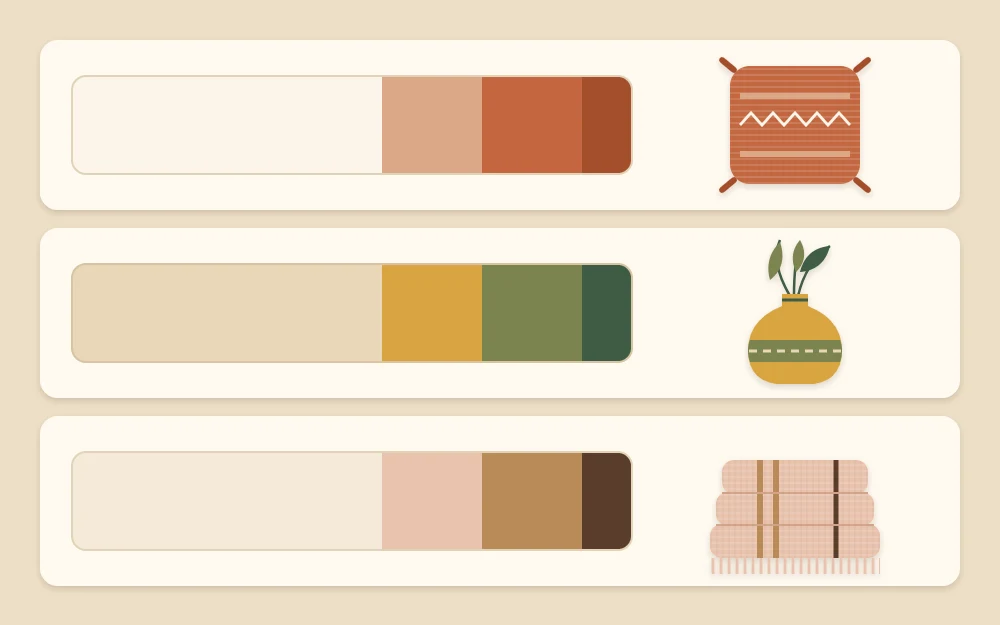
Use 60-30-10 as a loose guide
A common starting point for proportions is 60-30-10: about sixty parts base, thirty parts mid tones and ten parts anchor. Treat it as a way of thinking rather than something to measure. The useful idea inside it is that the three groups should not be equal. Most of the room stays light, a good share is mid-toned, and the dark color is a small accent.
If the room feels flat, the anchor is probably missing. If it feels heavy, the mid tones or the anchor have taken more than their share, and swapping one large mid-tone piece for the base tone usually corrects it.
Three example palettes
| Palette | Light base | Mid tones | Deep anchor |
|---|---|---|---|
| Sunbaked clay | Cream | Terracotta and ochre | Rust |
| Olive grove | Sand | Olive and camel | Forest green |
| Warm cocoa | Warm white | Clay and warm brown | Chocolate |
Sunbaked clay is the warmest of the three. Picture cream walls and bedding, a terracotta quilt folded at the foot, ochre in one or two pillows and rust only in the rug pattern and a small vase.
Olive grove is quieter and suits rooms with plenty of plants. Sand bedding, an olive throw, camel in a leather-look pouf or a woven basket, and forest green in a single pillow and a ceramic pot.
Warm cocoa works well with dark wood furniture. Warm white keeps it light, clay appears in the pillows, warm brown in the throw and the rug, and chocolate in a frame and a lamp base.
Check the colors in your own light
Daylight changes earth tones more than you might expect. A room that gets cool, even light for most of the day can make terracotta look brownish and cream look gray. A room with strong afternoon sun warms everything, so ochre can turn quite yellow.
Test before you commit. Lay your candidate fabrics on the bed and look at them in the morning, at midday and in the evening with the lamps on. Warm bulbs in plug-in lamps deepen clay and rust at night; if a color looks good at all three times of day, it will work.
Tip
You do not need paint samples to test a palette. A pillow cover, a folded towel and a scarf in roughly the right colors, placed together on the bed, will tell you more than a small card held in your hand.
Carry the palette through bed, rug and wall
A palette only works if each tone appears in more than one place. Spread them across the three big zones:
- The bed: base tone for sheets and duvet, one mid tone for the folded layer, the second mid tone and a touch of the anchor in the pillows.
- The rug: a pattern that includes the base and at least one mid tone ties the floor to the bed. The anchor can appear here as a thin line or border.
- The wall: a woven piece in the base tone adds texture without adding color; a print can repeat one mid tone and the anchor.
Wood, rattan and clay pots count as mid tones too, so include them when you judge the balance.
Quieter or bolder versions
The same structure stretches in both directions. Remove the stronger mid tones and work only with neighbors of the base, and you arrive at a neutral boho bedroom that relies on texture for depth. Push the mid tones toward saturated shades such as teal or mustard, and you are in the territory of a colorful boho bedroom, where the rules about repetition become more important.
Choosing the palette is the first stage of putting a room together. For what comes next, and in what order, see the guide on where to start with boho bedroom decor.
Frequently asked questions
How many colors should an earth-tone bedroom have?
Three or four is a good range: one light base, one or two mid tones and one deep anchor. Natural wood, rattan and plant green sit comfortably on top without needing to be counted. More than four main colors tends to make a bedroom look busy unless they are very close in tone.
Do earth tones work with gray walls or a gray floor?
They can. Use a base that bridges warm and cool, such as oatmeal or a soft sand, for the bedding, and let warmer mid tones like clay and camel appear in smaller pieces. Adding wood and woven fibers helps warm the scheme. Test fabrics against the gray in daylight before deciding.
Can I mix terracotta and olive green in one bedroom?
Yes. They are a classic pairing because one is warm and reddish and the other is a muted green, so each makes the other look richer. Let one of them lead and use the other in smaller amounts, with plenty of cream or sand between them so neither overwhelms the room.