Neutral Boho Bedroom Ideas: Depth Without Bright Color
Ten ideas for a cream-and-sand boho bedroom that does not look flat, each with the reason it adds depth: tone, texture, wood, a little dark and one green plant.
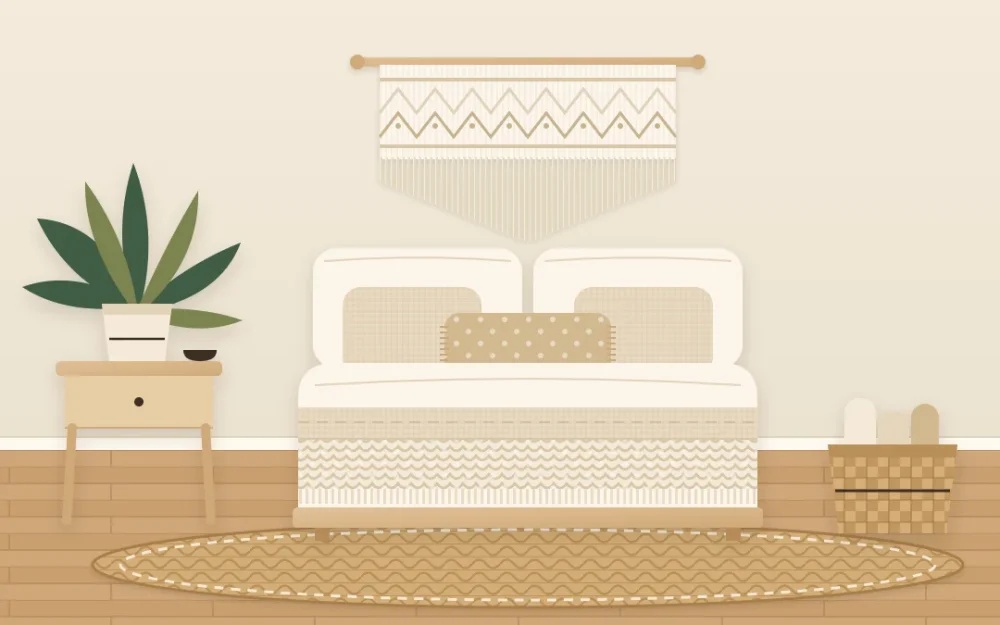
The fear with a neutral boho bedroom is always the same: that a room in cream and sand will end up looking like a blank box. It can, if every surface is the same shade and the same smoothness. But flatness comes from sameness, not from the absence of bright color.
Depth in a quiet room comes from two things you can control: small steps in tone, and big differences in texture. The ten ideas below are grouped by the job they do, and each comes with the reason it works, so you can pick the ones your room is missing.
Build depth with tone
1. Use four neighbors of one warm neutral. Instead of a single cream, choose a short run of related shades, such as ivory, oatmeal, sand and camel. Put the lightest on the walls and sheets and the deepest in a throw or a pillow. Why it adds depth: the eye reads the small steps between shades as layers, the way it reads shadows.
2. Keep every neutral warm. Check your whites and beiges side by side in daylight. A cool, bluish white next to a yellowish cream makes one of them look dirty. Stay on the warm side throughout. Why it adds depth: shades that share an undertone blend into one scheme, so the differences you see are the ones you intended. The guide to an earth-tone bedroom palette shows a simple way to check undertones against your walls and floor.
Let texture do the work of color
3. Put opposite textures next to each other. Smooth beside nubby, flat beside tufted, tight weave beside loose knit. A washed linen duvet with a chunky knitted throw across it is the simplest example. Why it adds depth: each surface catches light differently, so two pieces in the same color still look distinct.
4. Add one piece with real relief. Choose something with a raised surface you could feel with your eyes closed: a tufted throw, a quilt with visible stitching, a fringed or knotted pillow. Why it adds depth: raised texture casts tiny shadows, which give a pale surface its own pattern of light and dark.
5. Mix pillow fabrics, not pillow colors. Keep the pillows within your neutral run and vary what they are made of: one woven, one tufted, one plain linen. Why it adds depth: the head of the bed is where the eye lands first, and a change of surface there keeps it interesting. Sizes and arrangement are covered in the guide to mixing boho throw pillows.
Tip
Try the squint test. Half close your eyes and look at the bed. If it turns into one pale shape, add a piece with a rougher surface or a shade one step darker. If you can still pick out three or four layers, the mix is working.
Use wood and fiber as your mid tones
6. Let natural wood supply the brown. A light wood bedside table, a wooden stool, a picture frame or a bowl brings in honey and tan without any dyed fabric. Why it adds depth: wood sits halfway between your pale textiles and your darkest accents, filling the middle of the range that neutral rooms often lack.
7. Ground the floor with woven fiber. A braided jute or seagrass rug, a rattan chair or a large woven basket adds a golden mid tone and a coarse surface at the same time. Why it adds depth: a darker, rougher floor layer under a pale bed creates contrast from the ground up, so the bed appears to sit on something rather than float. For what each of these materials looks like and what it pairs with, see the guide to natural textures in a boho bedroom.
Punctuate with something dark
8. Add a little black or deep brown. A thin black frame, a dark lamp base, a charcoal line in a rug pattern or a deep brown ceramic pot is enough. Use it in two or three small places around the room. Why it adds depth: pale shades only look pale when there is something dark to compare them with. A few dark points sharpen everything near them, like punctuation in a sentence.
Bring in green and pale pattern
9. Make plants the only strong color. One leafy plant beside the bed or on the dresser, in a clay pot or a woven basket, stands out sharply against cream and sand. Dried grasses in a tall vase give a softer, tone-on-tone version; keep them away from heat sources. Why it adds depth: green is the natural partner of earthy neutrals, and a single living shape gives the eye a clear point to return to.
10. Hang a pale woven piece. A wall hanging in undyed cotton or wool, with knots and fringe, decorates the wall without adding color. A tone-on-tone rug or a pillow with a faint stripe does the same on the bed and floor. Why it adds depth: pattern made from texture or from two close shades adds detail while the room stays quiet.
Before you hang anything
Choose the fixing for your wall type and the weight of the piece, and follow the manufacturer instructions. Keep heavy items away from the wall directly above the pillows; a light textile is the better choice there.
Check the room in evening light
Neutral rooms change more than colorful ones when the light changes, because there is no strong color to hold steady. Under a single bright overhead light, texture flattens and every cream looks the same. Lower, warmer light from the side brings the surfaces back.
A plug-in table lamp on each side of the bed, or one table lamp and one plug-in floor lamp, is usually enough. Light that skims across a tufted throw or a woven hanging from the side shows every ridge and knot. Follow each lamp maker’s instructions for bulbs and placement.
If it still looks flat
Run through this short list before you reach for a colored pillow:
- Are all the textiles the same smoothness? Swap one for something rougher.
- Is there a gap in the middle of the range? Add wood, jute or a camel-toned layer.
- Is there anything dark? Add two small dark accents.
- Is there anything alive? Add one plant.
- Is the light coming only from above? Switch on a lamp at bed height.
Fix one item at a time and look again from the doorway.
Frequently asked questions
How do I stop a neutral bedroom from looking boring?
Vary texture and tone instead of color. Use three or four related warm shades rather than one, place rough fabrics beside smooth ones, add wood and woven fiber for mid tones, and include a few small dark accents. One green plant gives the eye a clear focal point without breaking the calm.
Which neutrals go together in a boho bedroom?
Warm ones that sit close together: ivory, cream, oatmeal, sand, camel and tan. They share a yellowish or peachy undertone, so they blend easily. Avoid mixing them with cool bluish whites or cool grays, which can make the warmer shades look dull. Compare fabrics side by side in daylight to check.
Can I add black to a neutral boho bedroom?
Yes, in small amounts. A thin black picture frame, a dark lamp base or a fine dark line in a rug gives the pale shades something to contrast with and makes the room look sharper. Keep each dark piece small and repeat it two or three times around the room.