Boho Bedroom Decor for Beginners: Where to Start
A plain starting guide to the boho look: what actually makes a bedroom read as boho, and a six-stage order to work in so you build a foundation before you add accessories.
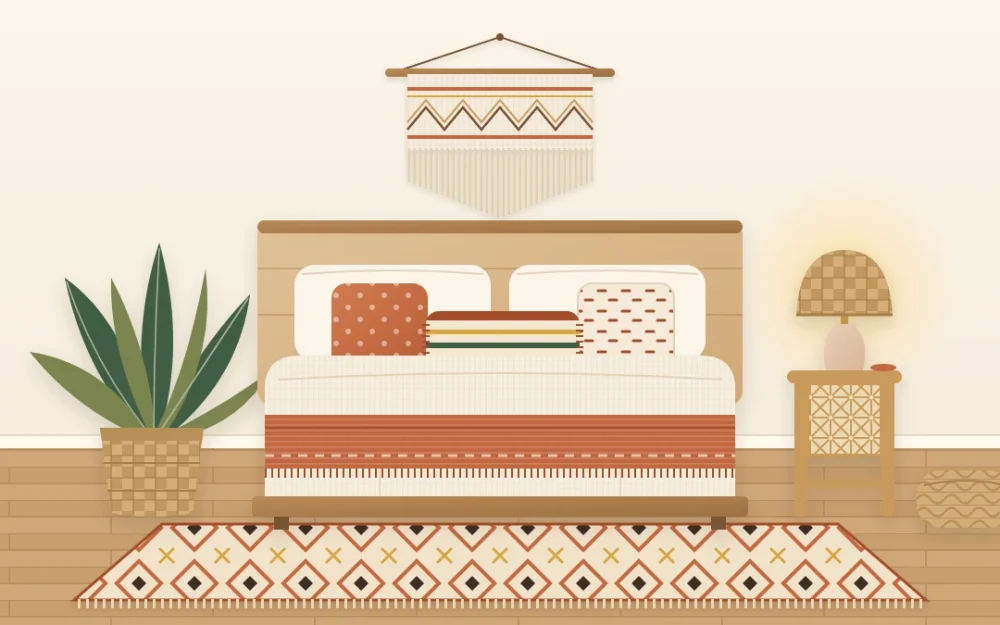
Most people come to boho bedroom decor through a single picture: a low bed piled with soft layers, a woven piece on the wall, a plant catching the light. The look seems effortless, which is exactly why it is hard to know where to begin. Buy the wrong things first and you end up with a room full of accessories and no foundation under them.
The good news is that the style is built in a clear order, from the largest surfaces down to the smallest objects. Work through the stages below one at a time, and stop to look at the room after each. You may find you are finished sooner than you expected.
What makes a bedroom read as boho
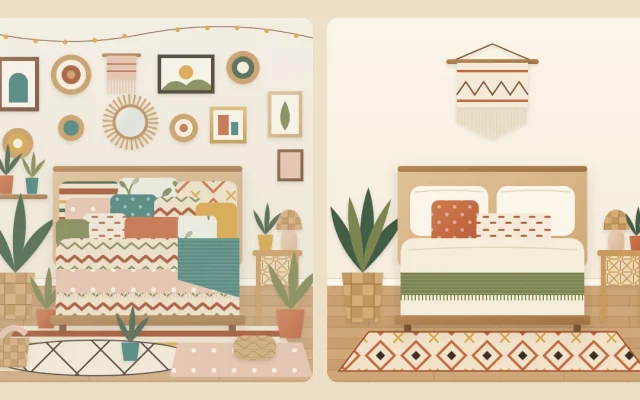
Before you move anything, it helps to know what you are aiming for. The word itself has a long history as a label for an unconventional, artistic way of living, and the background of the bohemian style explains why the look feels gathered rather than bought as a set. In a bedroom, five things do most of the work:
- Layered textiles. More than one fabric on the bed, something soft underfoot, something woven on the wall.
- Natural materials. Wood, rattan, jute, linen, cotton, wool and clay, left looking like themselves.
- Warm, earthy color. Cream and sand as the background, with clay, ochre, olive or rust on top.
- Plants. Green is the one color that suits every version of the style.
- A collected feel. Pieces that relate to each other without matching.
Notice what is not on the list: a particular piece of furniture, a specific pattern or a large number of objects. You can build the look around the bed and dresser you already own.
Stage 1: Choose a warm base palette
Color comes first because it decides everything you bring in afterward. Start with what you cannot easily change: the floor, the wall color and the largest furniture. Then pick one light base tone, one or two mid tones and one deeper accent that sit comfortably with those fixed elements.
Three or four colors is plenty for a first attempt. Write them down or keep fabric scraps in a bag, and check every later choice against them. The guide to building an earth-tone bedroom palette walks through how to choose the tones and how much of each to use.
Stage 2: Dress the bed
The bed is the largest object in the room, so it carries the style more than anything else. If you only do one thing, do this. Keep the sheets plain and in your base tone, add a duvet or quilt with a washed or textured surface, fold a second layer across the foot, then finish with a few pillows in mixed sizes and one throw.
Aim for relaxed rather than pressed. A slightly rumpled linen cover looks more at home here than tight hotel corners. The order of the layers, and which fabrics work together, is covered in the guide to layering a boho bed.
Tip
After the bed is dressed, stand in the doorway and look for a full minute. If the room already feels warmer and softer, your palette is working. If something jars, fix it now, while there are only a few pieces to adjust.
Stage 3: Add a rug
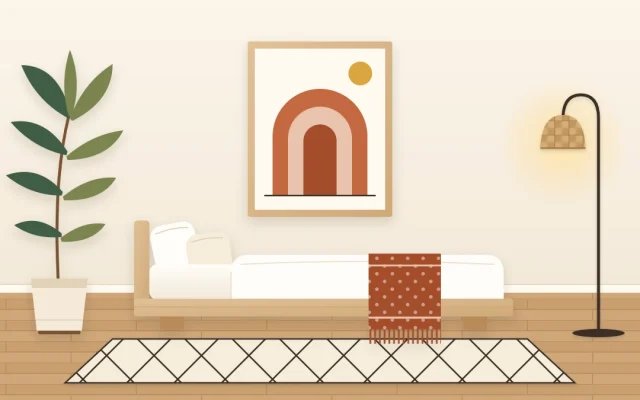
A rug gives the bed something to sit on and brings texture to the largest empty surface in the room. A common starting point is a rug large enough to show on both sides of the bed, so your feet land on it in the morning. A braided jute rug suits a quiet room; a flat-woven rug with a geometric pattern suits a room that needs more life.
Choose one or the other for now. If the bedding is patterned, a plain textured rug keeps things calm. If the bedding is plain, the rug can be the piece that carries the pattern.
Stage 4: Bring in one or two natural-fiber pieces
This is where the room starts to feel collected. Add one or two pieces in rattan, cane, seagrass or raw wood: a woven basket for spare blankets, a rattan bedside table, a wooden stool, a cane chair in a corner. Pick pieces that also do a job, so they earn their floor space.
Resist buying a matching set. Two different natural materials that share a warm tone look more convincing than three identical baskets. If you like the warmth but prefer straighter lines and more plain surface, look at these modern boho bedroom ideas before you choose furniture.
Stage 5: Style the wall above the bed
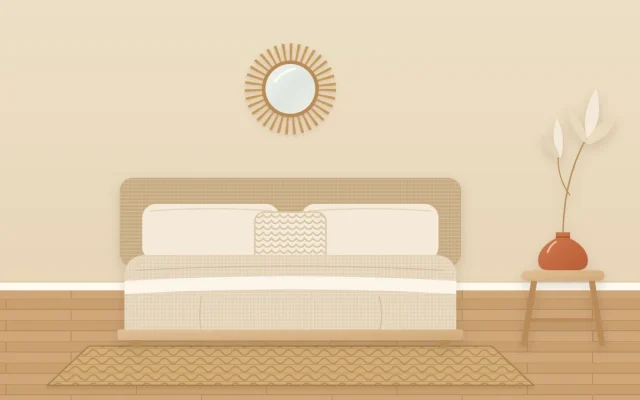
With the bed and floor settled, the wall behind the bed becomes the natural focal point. One generous piece usually works better than several small ones: a woven wall hanging, a large print, a round rattan-framed mirror on a side wall, or a textile on a rod. As a rule of thumb, a piece about half to two-thirds the width of the bed looks in proportion.
Before you hang anything
Choose the hardware for your wall type and for the weight of the piece, and follow the manufacturer instructions that come with it. Keep anything heavy away from the space directly above the pillows; a light textile is the better choice there. If you rent, check your lease or ask before making changes. A print leaning on a dresser needs no fixing at all.
Stage 6: Finish with plants and small objects
Plants and small objects go in last because they are the easiest to overdo. Start with one plant that suits the light the spot really gets, in a clay pot or a woven basket. Then add a few small things you like to look at: a ceramic dish, a short stack of books, a vase with dried stems kept well away from any heat source.
Two or three objects per surface is a sensible limit while you are learning the style. Leave part of every surface empty so the pieces you chose can be seen.
Stop, look and edit
The habit that separates a calm boho room from a crowded one is pausing between stages. After each step, leave the room, come back and ask one question: does it need more, or is it done? Many rooms are finished after stage four.
If the room starts to feel busy, take away the most recent addition before you buy a fix. The guide to keeping a boho bedroom balanced shows how to check a room from the doorway and what to remove first.
Frequently asked questions
What should I buy first for a boho bedroom?
Start with the bed rather than accessories. A textured duvet cover or quilt in a warm neutral, plus one folded layer at the foot, changes the room more than any small object. Once the bed looks right, a rug is the next most useful piece, followed by one natural-fiber item such as a basket.
Do I need new furniture to get the boho look?
No. The style depends on textiles, natural materials and color far more than on a particular bed or dresser. Plain existing furniture makes a good background for layered bedding, a woven rug and a plant. If a piece feels cold, soften it with a basket, a wooden tray or a folded throw nearby.
How many colors should a beginner use?
Three or four is a comfortable number for a first room: one light base such as cream or sand, one or two earthy mid tones such as clay or olive, and one deeper accent like rust. Repeating those same few colors around the room looks more settled than adding a new shade with every purchase.